
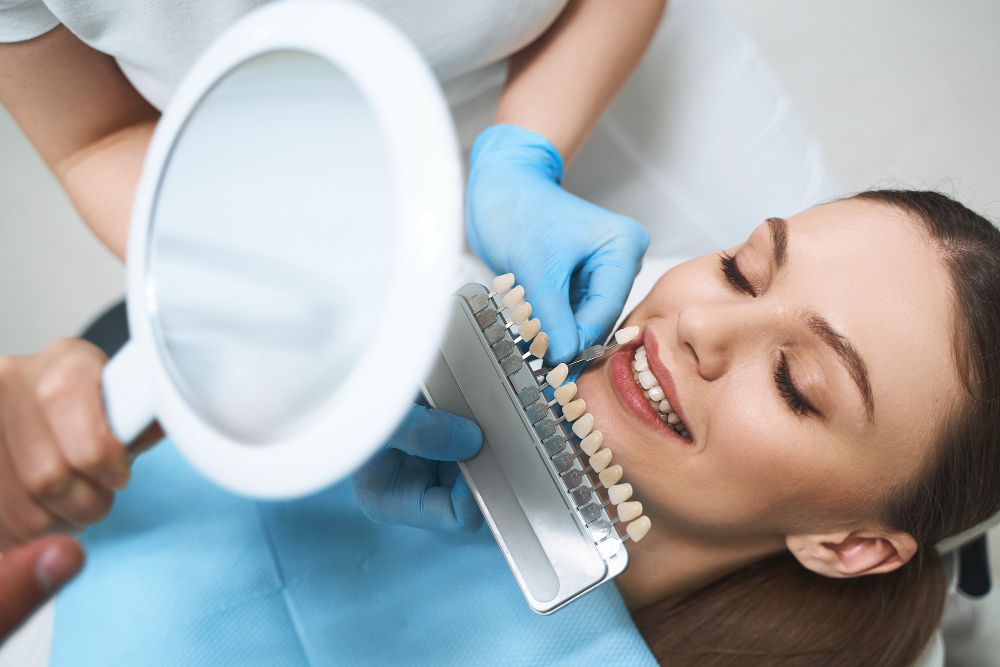
The Question Everyone Asks Before Getting Veneers
Are veneers permanent? The short answer: the process is permanent, but the veneers themselves are not.
Here’s what that means at a glance:
Porcelain Veneers Composite Veneers Process reversible? No Mostly no Lifespan 10–20 years 5–7 years Enamel removal required? Yes Minimal Can you return to natural teeth? No Rarely
Once a dentist removes enamel to place veneers, that enamel is gone forever. Your teeth will always need some form of covering after that. The veneers themselves, though, will eventually wear out and need replacing.
This distinction matters — a lot — before you commit to the procedure.
About 600,000 Americans get veneers every year, and that number has grown by roughly 250% in recent years. Yet many patients are surprised to learn what “permanent” actually means in this context.
I’m Dr. Sandra Puerto, a cosmetic dentist with advanced training in porcelain veneers and smile makeovers, and one of the most common questions I hear is whether are veneers permanent in a way that should give patients pause before proceeding. Having helped many patients navigate this decision, I’ll walk you through exactly what to expect so you can choose with confidence.
Are Veneers Permanent? Understanding the Irreversible Process
When we talk about cosmetic dentistry, we often distinguish between temporary treatments—like professional teeth whitening, which naturally fades over a year or two—and long-term smile transformations. Dental veneers fall firmly into the long-term, irreversible category.
To understand why the process of getting veneers is permanent, we have to look closely at the anatomy of your teeth.
The outermost layer of your tooth is the enamel. Enamel is the hardest tissue in the human body, serving as a highly mineralized shield that protects the sensitive dentin and pulp underneath. However, unlike your skin, bones, or even your fingernails, enamel does not contain living cells. Once it is damaged, worn away, or shaved down, it cannot regenerate. Enamel does not grow back.
During a traditional veneer procedure, a cosmetic dentist must prepare your teeth to ensure the final result looks natural and fits comfortably within your bite. If we were to simply bond a shell of porcelain directly onto an unprepared tooth, the tooth would look bulky, feel thick, and potentially irritate your gum line.
To prevent this “chiclet” look, we carefully remove a very thin layer of enamel—typically between 0.2 and 0.7 millimeters. While this is incredibly thin (about the thickness of a contact lens), it represents a permanent modification of your tooth structure.
According to the Cleveland Clinic Dental Veneers Guide, this preparation step is what makes traditional veneers an irreversible commitment. Because the protective enamel shield has been altered, your natural teeth will always require a protective restoration—whether that is a replacement veneer or a dental crown—to shield the exposed dentin from decay, extreme temperatures, and physical wear.
As we practice in 2026, modern dental standards emphasize conservative preparation. We use advanced digital design tools to preserve as much of your natural tooth structure as possible. However, even “minimal-prep” or “no-prep” veneers often require minor smoothing or reshaping of the enamel to create a seamless edge where the restoration meets your tooth. Therefore, you should always enter the veneer process with the understanding that there is no going back to your original, unprepared teeth.
Porcelain vs. Composite: The Permanence and Lifespan Debate
Not all veneers are created equal. The two primary materials used to craft these custom smiles are porcelain (ceramic) and composite resin. While both can dramatically improve the color, shape, size, and alignment of your teeth, they differ significantly in their durability, aesthetic properties, and level of permanence.
Porcelain is widely considered the gold standard for smile transformations. It is a highly durable ceramic material that mimics the light-reflecting qualities of natural enamel beautifully. Porcelain is also exceptionally stain-resistant, meaning your morning coffee or evening glass of red wine won’t dull your new smile.
On the other hand, composite veneers are made from a tooth-colored mixture of plastic and glass monomer (the same material used for dental bonding). While composite veneers are highly versatile, cost-effective, and can often be completed in a single visit, they are more porous than porcelain. This makes them more susceptible to staining, chipping, and gradual wear over time.
When exploring your cosmetic dentistry options in Windermere, understanding these material differences will help you align your treatment choice with your budget, lifestyle, and long-term goals.
Are Veneers Permanent? The Lifespan of Porcelain
If you choose porcelain, you are investing in a highly resilient, long-lasting restoration. But exactly how long do they last?
Clinical studies offer excellent data on this front. Research shows that porcelain veneers have a 91% survival rate at 10 years and a 73% survival rate at 20 years. Furthermore, specific types of high-strength ceramics, such as feldspathic porcelain veneers, show an impressive 94.4% survival rate over 12 years.
On average, you can expect your porcelain veneers to last between 10 to 15 years, with many lasting up to 20 years when they are meticulously cared for.
Modern cosmetic dentistry in 2026 frequently utilizes advanced ceramics like lithium disilicate (often known by the brand name Emax). This material offers the ultimate combination of beauty and toughness, allowing us to create ultra-thin veneers that require minimal enamel removal while offering superior resistance to fractures. While they are not “permanent” in the sense that they will last forever without replacement, they represent one of the most durable cosmetic investments you can make.
Are Veneers Permanent When Made of Composite Resin?
Composite veneers offer a different balance of benefits and limitations. The average lifespan of composite resin veneers is 5 to 7 years before they typically require replacement or significant refurbishment. Because the composite material is softer than ceramic, it gradually loses its polish, accumulates microscopic scratches, and absorbs pigments from food and beverages over time.
However, composite veneers are often discussed as a “less permanent” or “reversible” option. Why is this?
Because composite resin can be applied directly to the teeth and sculpted in place, the procedure often requires minimal to no enamel removal. If your dentist does not have to shave down your enamel to place the composite, the process is technically reversible. If you ever decided to have them removed, a dentist could carefully polish the composite material off, leaving your original natural teeth intact.
That said, true reversibility is rare. In most clinical scenarios, some minor reshaping of the natural tooth is still necessary to achieve a beautiful, functional result. Therefore, even with composite, you should prepare for a long-term commitment to maintaining and eventually replacing your restorations.
What Happens to Your Natural Teeth Under Veneers?
One of the most common myths we hear in our Windermere practice is that veneers will “ruin” or “rot” the natural teeth underneath. Some patients picture their teeth decaying into tiny, blackened pegs beneath the porcelain shells. Fortunately, this is not how veneers work.
When placed by a skilled, experienced cosmetic dentist, veneers do not damage your natural teeth. In fact, the opposite is true: the veneer acts as a protective shield over the front surface of the tooth, protecting the underlying structure from physical wear and acid erosion.
However, the health of the tooth under the veneer depends entirely on two factors: the precision of the dental work and your personal oral hygiene.
During the bonding process, we use a specialized, high-strength dental cement to seal the veneer to your remaining enamel. This seal must be absolutely flawless. If there is a tiny gap or margin where the veneer does not fit perfectly against the tooth, bacteria can slip underneath. Over time, this can lead to “hidden” tooth decay or gum irritation.
This is why choosing an experienced cosmetic dentist who utilizes advanced magnification and precise techniques is so critical. You can see examples of seamlessly fitted, healthy restorations by exploring our smile gallery.
Another concern is tooth sensitivity. Because a small layer of protective enamel is removed, some patients experience temporary sensitivity to hot and cold temperatures immediately after their veneers are prepped and placed. This is completely normal and typically resolves within a few weeks as the nerve inside the tooth adapts.
Factors That Influence How Long Your Veneers Will Last
While the quality of the material and the skill of your dentist set the foundation, the ultimate lifespan of your veneers is largely in your hands. If you want your investment to last 15 to 20 years rather than failing prematurely, you must pay attention to several key lifestyle and maintenance factors.
- Oral Hygiene: Just because the front of your tooth is covered in stain-proof porcelain does not mean you are immune to cavities. The back of your tooth, the root, and the margins where the veneer meets the tooth are still made of natural enamel and dentin. If plaque accumulates along the gum line, decay can form, undermining the support of the veneer. Brush twice a day with a soft-bristled toothbrush and a non-abrasive fluoride toothpaste, and floss daily.
- Bruxism (Teeth Grinding): Clenching and grinding your teeth exerts immense physical pressure on your restorations. While porcelain is incredibly strong, the shearing forces of grinding can cause the ceramic to fracture or debond. If you have a habit of grinding your teeth at night, wearing a custom-fit occlusal guard (nightguard) is non-negotiable to protect your smile.
- Dietary Habits: Veneers are designed to handle normal chewing forces, but they are not indestructible. Avoid biting directly into exceptionally hard foods like ice, hard candies, raw carrots, or bone-in meats with your front teeth. Instead, cut these foods into smaller, bite-sized pieces and chew them with your back teeth. And, of course, never use your teeth as tools to open packages, bite your nails, or hold pens.
- Regular Dental Visits: Routine professional cleanings and examinations every six months allow us to monitor the integrity of your veneers, check for early signs of margin wear or gum recession, and keep the surrounding tissue perfectly healthy.
For more detailed tips on protecting your cosmetic restorations, browse through more veneers articles on our blog.
Frequently Asked Questions About Veneer Permanence
We believe that an informed patient is a happy patient. Here are the detailed answers to the questions we hear most frequently in our office.
Can you go back to your natural teeth after getting veneers?
No, you cannot go back to your natural teeth after getting traditional veneers. Because the process of prepping the teeth involves permanently removing a layer of your natural enamel, your teeth will be left structurally altered, slightly rougher, and more vulnerable to sensitivity and decay if left uncovered.
Once you begin the veneer journey, you are committing to keeping your teeth covered with a restoration for the rest of your life. If a veneer chips, breaks, or reaches the end of its lifespan, it must be replaced. The only alternative to a veneer at that stage would be a full dental crown, which requires even more tooth structure to be removed.
Do veneers damage or weaken your natural teeth?
No. When designed and placed correctly by a qualified professional, veneers do not damage or weaken your natural teeth. In fact, veneers can actually reinforce and protect teeth that are already chipped, worn down, or structurally compromised by minor enamel cracks.
The key is conservative preparation. By removing only the absolute minimum amount of enamel required to achieve a beautiful, functional result, we preserve the structural integrity of your tooth. Damage only occurs if a dentist prepares the teeth too aggressively or if poor oral hygiene allows decay to develop beneath the restorations.
When should veneers be replaced and what does it involve?
Veneers do not last forever, and you will eventually need to replace them. Common indicators that it is time for a replacement include:
- Visible Damage: Chips, cracks, or significant wear in the porcelain or composite.
- Staining or Discoloration: While porcelain does not stain, the bonding cement beneath it can darken over time, or the surrounding natural teeth may discolor, making the veneers look mismatched.
- Gum Recession: If your gums recede, the boundary where the veneer meets your natural tooth root may become visible, creating an unsightly dark line.
- Looseness: If the bonding agent begins to fail, the veneer may feel loose or detach entirely.
The replacement process is highly precise. We carefully use specialized dental tools (and sometimes advanced dental lasers) to gently break the bond and remove the old veneer without damaging your underlying natural tooth structure. Once the old material is removed, we clean the tooth, take fresh digital impressions, and have our master ceramist craft a brand-new, customized veneer to restore your smile to perfection.
Conclusion
Deciding to transform your smile with dental veneers is an exciting step, but it is one that requires careful consideration of its permanent nature. While the veneers themselves will eventually need to be replaced after a decade or two, the modification to your natural teeth is a lifelong commitment.
At Inspired Dental, we specialize in advanced, aesthetic-focused dentistry that prioritizes both your oral health and your self-confidence. Serving the communities of Windermere, Winter Garden, Ocoee, and the surrounding Southwest Orlando area, our multilingual team is dedicated to providing a modern, patient-centered experience. Whether you are looking for a subtle enhancement or a complete smile makeover, we are here to guide you every step of the way with honesty and expert care.
Ready to explore what a custom smile design can do for you? Schedule a consultation for dental veneers in Windermere with us today, and let’s work together to create a radiant, healthy smile that you will love for years to come.