
Invisalign and Clear Aligners: What’s the Difference?
If you’re weighing Invisalign and clear aligners as your path to a straighter smile, here’s the short answer:
Invisalign Generic Clear Aligners Brand Proprietary (Align Technology) Various brands Material SmartTrack thermoplastic Standard clear plastic Best for Mild to complex cases Mild to moderate cases Cost $3,000–$8,000+ Often 10–20% less Oversight In-office with trained provider In-office or remote Insurance Often covered up to $3,000 Usually covered equally Wear time 20–22 hours/day 20–22 hours/day
A few decades ago, straightening teeth meant one thing: metal braces. Today, millions of adults are quietly fixing their smiles with clear plastic trays — no brackets, no wires, no awkward grins in work meetings.
The clear aligner market is on track to reach $26 billion by the end of this decade. And Invisalign alone has already been chosen by over 22 million patients worldwide. That kind of growth doesn’t happen without a good reason.
But with so many options now available — from the Invisalign brand to a growing list of alternatives — it’s easy to feel overwhelmed. Are they the same thing? Is one better? How do you even choose?
This guide breaks it all down clearly, so you can make a confident decision about your smile.
I’m Dr. Sandra Puerto, a cosmetic and family dentist with advanced training in Invisalign and clear aligners from Nova Southeastern University and years of hands-on experience helping patients achieve confident smiles. I’ll walk you through everything you need to know so you can find the right fit for your teeth, your lifestyle, and your budget.
What Are Clear Aligners and How Do They Work?
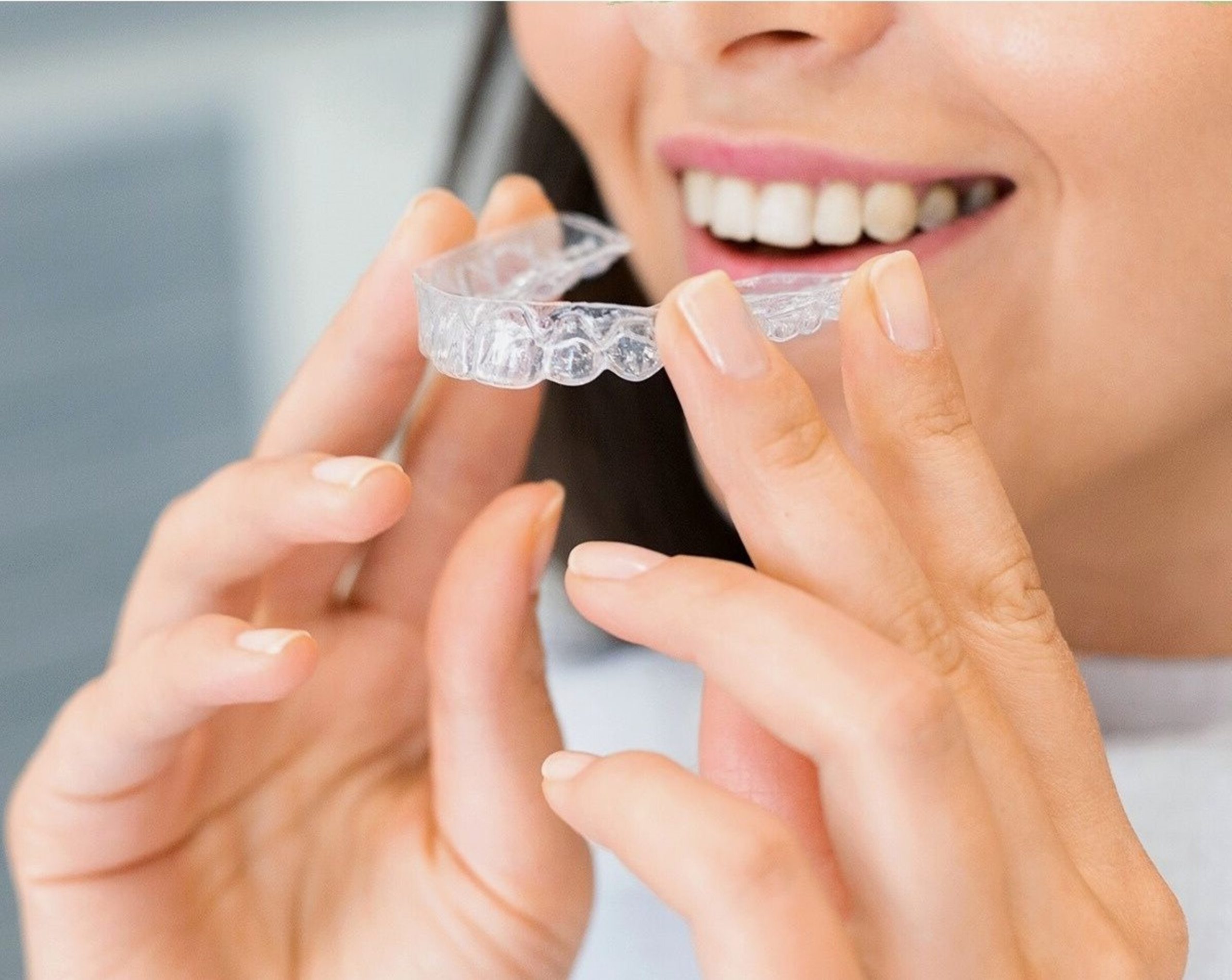
Clear aligners are transparent, custom-fit orthodontic trays made from medical-grade plastic. Invented in the late 1990s, they were designed as a cosmetically pleasing, removable alternative to traditional metal braces. Instead of using metal brackets glued to your teeth and tensioned with wires, clear aligners slip directly over your teeth, fitting snugly like a thin, invisible mouthguard.
But how do these lightweight plastic trays actually move teeth? It all comes down to basic biological science.
When you place a custom aligner tray over your teeth, it is engineered to be slightly different from your current tooth alignment. This structural difference applies gentle, constant pressure to specific teeth. This pressure triggers a biological process within your jawbone:
- Bone Resorption: On the side of the tooth where pressure is applied, specialized cells break down bone tissue in the jaw, allowing the tooth to move.
- Bone Deposition: On the opposite side, new bone cells deposit minerals to fill in the space, locking the tooth securely into its new, straightened position.
This complex cellular remodeling relies entirely on the periodontal ligament—the connective tissue that anchors your teeth to your jaw. Because this biological process takes time, you must wear your aligners for 20 to 22 hours per day, removing them only to eat, drink, brush, and floss.
How Invisalign and Clear Aligners Straighten Your Teeth
The journey to a straighter smile begins with a digital consultation. Instead of using the messy, goopy putty molds of the past, we use advanced 3D digital scanners to capture a highly accurate, three-dimensional model of your mouth in just a few minutes.
Using specialized treatment planning software, we map out the precise, step-by-step path your teeth will take from their current positions to their final, ideal alignment. Each aligner tray in your custom series is manufactured to move your teeth a fraction of a millimeter at a time.
Typically, you will wear each set of trays for one to two weeks before transitioning to the next set in the series. As you progress through the trays, you will begin to notice visible changes in your smile in as little as a few weeks.
To learn more about how clear aligner systems differ from traditional orthodontic methods, explore our Blog Category: Clear Aligners and compare your options by visiting our Blog Category: Braces.
Beyond the obvious aesthetic benefits, straightening your teeth with removable trays provides major oral hygiene advantages. Because you can take the trays out, you can brush and floss normally, avoiding the plaque buildup, tooth decay, and gum inflammation often associated with fixed metal brackets.
The Role of Advanced Materials and Technology
While all clear aligners look similar at first glance, the materials used to make them vary significantly. This material science is what truly sets premier brands apart from generic alternatives.
Invisalign aligners are manufactured from a patented, proprietary thermoplastic material called SmartTrack. Developed after testing hundreds of different materials, SmartTrack is specifically engineered for orthodontic use. It offers a unique combination of flexibility, durability, and constant, gentle force delivery. This advanced material provides more predictable tooth movements compared to older, single-layer plastic materials.
Additionally, Invisalign aligners are precisely trimmed to match each patient’s individual gum line. This customized trimming prevents the plastic from rubbing against or irritating your delicate gum tissue, maximizing overall comfort and keeping the aligners virtually invisible. To understand why this high-tech engineering makes such a major difference in your treatment experience, read more about Why Invisalign® Aligners are worth it | Invisalign.com .
Key Differences Between Invisalign and Clear Aligners
When choosing between Invisalign and clear aligners from generic or mail-order brands, the primary differentiator is the level of professional medical oversight and the advanced technology involved.
Invisalign is an in-office treatment system. This means your entire orthodontic journey is planned, monitored, and adjusted in person by a qualified local doctor. We perform physical examinations, take digital X-rays to check your root health, and place tiny, tooth-colored composite attachments (known as SmartForce attachments) on your teeth to help the aligners grip and rotate them with absolute precision.
In contrast, many generic clear aligner brands—especially direct-to-consumer, mail-order options—rely on remote monitoring or no professional monitoring at all. While remote aligners may seem convenient and budget-friendly, they carry significant clinical risks. Without in-person evaluations, underlying dental issues like gum disease or tooth decay can go unnoticed, and unsupervised tooth movement can lead to permanent root damage, severe bite misalignment, or even tooth loss.
Feature Invisalign Generic / Mail-Order Aligners Material SmartTrack Proprietary Thermoplastic Standard Clear Plastics Clinical Oversight In-person dental visits throughout Remote or self-guided Complexity Treats mild, moderate, and complex cases Limited to mild or moderate cases Customization Scanned in-office, trimmed to gum line Often home-molded, flat-cut edges Attachments SmartForce attachments for complex grip Rarely available
The Cost of Invisalign and Clear Aligners
We understand that budget is a major factor when considering orthodontic care. The cost of clear aligner treatment varies based on the complexity of your case, how many aligner trays you require, and the brand you choose.
Generally, Invisalign treatment ranges from $3,000 to $8,000 or more, which is highly comparable to the cost of traditional metal braces. Generic, in-office aligner brands may cost 10% to 20% less, while mail-order brands are often cheaper but lack essential in-person clinical care.
The good news is that financial barriers shouldn’t keep you from your dream smile. Many dental insurance plans that include orthodontic coverage treat clear aligners and traditional braces equally, often covering up to $3,000 of the cost.
To explore the official details on pricing structures, insurance averages, and how to utilize your Flexible Spending Accounts (FSA) or Health Savings Accounts (HSA) to pay for your treatment, visit Invisalign® Clear Aligners & Teeth Straightening | Invisalign.com . For a local perspective on how clear braces fit into a comprehensive cosmetic plan, you can also read about Invisalign | Clear Braces or review informational resources on Invisible Braces | Dentist Arnold, MD – Bay Hills Family Dentistry .
Treatment Scope and Complexity
Not all clear aligners are designed to treat the same dental issues. Generic, direct-to-consumer aligners are typically limited to minor, cosmetic adjustments in the front of the mouth, such as closing a small gap or correcting mild crowding.
Because Invisalign utilizes advanced digital planning, SmartTrack material, and SmartForce attachments, it can handle a much wider scope of orthodontic issues. This includes moderate to severe crowding, large gaps, overbites, underbites, crossbites, and open bites.
If you are wondering whether you need to see a specialist or if a general dentist can guide your treatment, check out our guide on Can I See a General Dentist for Invisalign?.
For those living in Southwest Orlando, you can explore specialized regional resources such as Invisalign for Crowded Teeth Windermere , look into local options like Invisalign Aligners in Ocoee, FL , or learn more about Invisalign® Clear Aligners in Windermere & Winter Garden, FL .
Treatment Timeline, Candidacy, and Orthodontic Issues
How long does clear aligner treatment take? On average, treatment with Invisalign and clear aligners takes between 6 to 18 months.
For mild to moderate alignment cases, you can achieve your desired results in as little as 6 months. In fact, studies show that Invisalign treatment can be up to 5 months faster on average than traditional metal braces, with visible changes appearing in just a few weeks.
Your final timeline depends heavily on two main factors:
- Case Complexity: Severe alignment issues naturally require more movement stages and a longer series of trays.
- Patient Compliance: This is the most critical factor. Because the trays are removable, your progress is entirely in your hands. If you do not wear your aligners for the recommended 20 to 22 hours every single day, your teeth will not move according to schedule, and your treatment timeline will be extended.
Clear aligners are highly versatile and suitable for a wide range of age groups. Invisalign offers specialized systems for children as young as 6 years old (Invisalign First), helping guide growing jaws and incoming permanent teeth, as well as dedicated systems for teenagers and adults.
Who Is a Good Candidate?
Most adults and teenagers who want to straighten their teeth without the look of metal brackets are excellent candidates for clear aligners. This modern approach is highly compatible with active lifestyles, busy professional schedules, and public-facing careers.
We use clear aligners to treat a variety of common orthodontic conditions, including:
- Crowded Teeth: When there isn’t enough room in your jaw for your teeth to fit naturally without overlapping.
- Gapped Teeth: Extra spaces or gaps between two or more teeth.
- Overbites and Underbites: When your upper teeth overlap your lower teeth too much, or vice versa.
- Crossbites: When some of your upper teeth sit inside your lower teeth when you close your mouth.
To see how clear aligners can play a central role in a complete smile transformation, explore our options for Cosmetic Dentistry Windermere and browse through our educational articles in the Blog Category: Cosmetic Dentistry or the Blog Category: Dental Information.
Daily Maintenance and Care Routine
Keeping your aligners clean is essential for maintaining your oral health and ensuring your trays remain completely invisible. Follow these simple daily best practices:
- Rinse Immediately: Every time you take your aligners out of your mouth, rinse them with lukewarm water to remove saliva and plaque. Never use hot water, as it can warp the medical-grade plastic and ruin the custom fit.
- Brush Gently: Clean your aligners daily using a soft-bristled toothbrush and a clear, mild liquid soap or a specialized aligner cleaning solution. Avoid using abrasive toothpastes, which can scratch the plastic and make it look cloudy.
- Maintain Your Oral Hygiene: Always brush and floss your teeth before putting your aligners back in. Trapping food particles and sugars against your teeth under the plastic trays can rapidly lead to tooth decay and bad breath.
- Protect Your Trays: When you aren’t wearing your aligners—such as during meals or while playing contact sports—always store them in their protective case.
Once your active treatment is complete, you will transition to wearing a retainer (such as a custom Vivera retainer) to prevent your teeth from shifting back to their original positions. For more practical tips on managing your daily routine, check out the Invisalign and Clear Aligner FAQs – Phillips Family Orthodontics .
Frequently Asked Questions About Orthodontic Trays
Navigating orthodontic care comes with plenty of questions. For more detailed answers, explore our Blog Category: Dental FAQs and our Blog Category: Invisalign.
Do clear aligners hurt compared to traditional braces?
You can expect a brief adjustment period of about a week when you first start treatment or switch to a new set of trays. During this time, you may feel a mild pressure or soreness, which is a normal sign that the trays are successfully moving your teeth.
However, clear aligners are significantly more comfortable than traditional braces. In clinical surveys, Invisalign patients rated their comfort at a 7.1 out of 9, compared to just 5.5 for those wearing metal braces. There are no sharp metal brackets or wires to poke or cut your cheeks and gums. If you do experience mild temporary discomfort, over-the-counter pain relievers can easily manage it.
How many hours a day do I need to wear my aligners?
You must wear your aligner trays for 20 to 22 hours every single day. The only times you should remove them are when you are eating meals, drinking liquids other than plain water, brushing, flossing, or temporarily wearing a mouthguard for contact sports. Consistent daily wear is the single most important factor in achieving your treatment goals on time.
Does dental insurance cover clear aligner treatment?
Yes, many dental insurance plans that include orthodontic coverage cover clear aligners in the exact same way they cover traditional braces. Depending on your specific provider and policy, your insurance may cover up to $3,000 of your treatment costs. Our team is always happy to help you verify your benefits and maximize your coverage.
Conclusion
Choosing between Invisalign and clear aligners is an investment in your health, your confidence, and your future. While generic aligners can work well for minor cosmetic adjustments, Invisalign’s advanced SmartTrack material, customized gum-line trimming, and dedicated in-person doctor oversight make it the premier choice for predictable, comfortable, and comprehensive smile transformations.
At Inspired Dental, we are proud to serve families across Southwest Orlando, including Windermere, Winter Garden, Ocoee, Dr. Phillips, Horizon West, Gotha, Bay Hill, Lake Butler, and Oakland. Our practice stands out through our dual focus on dental health and facial aesthetics, our advanced expertise in airway-focused dentistry, and our warm, multilingual dental team. We are dedicated to providing a modern, patient-centered experience that makes your journey to a healthier, more beautiful smile as seamless as possible.
Ready to take the first step toward your dream smile? Explore our Blog for more helpful tips, and Schedule your Invisalign consultation in Windermere with us today!